
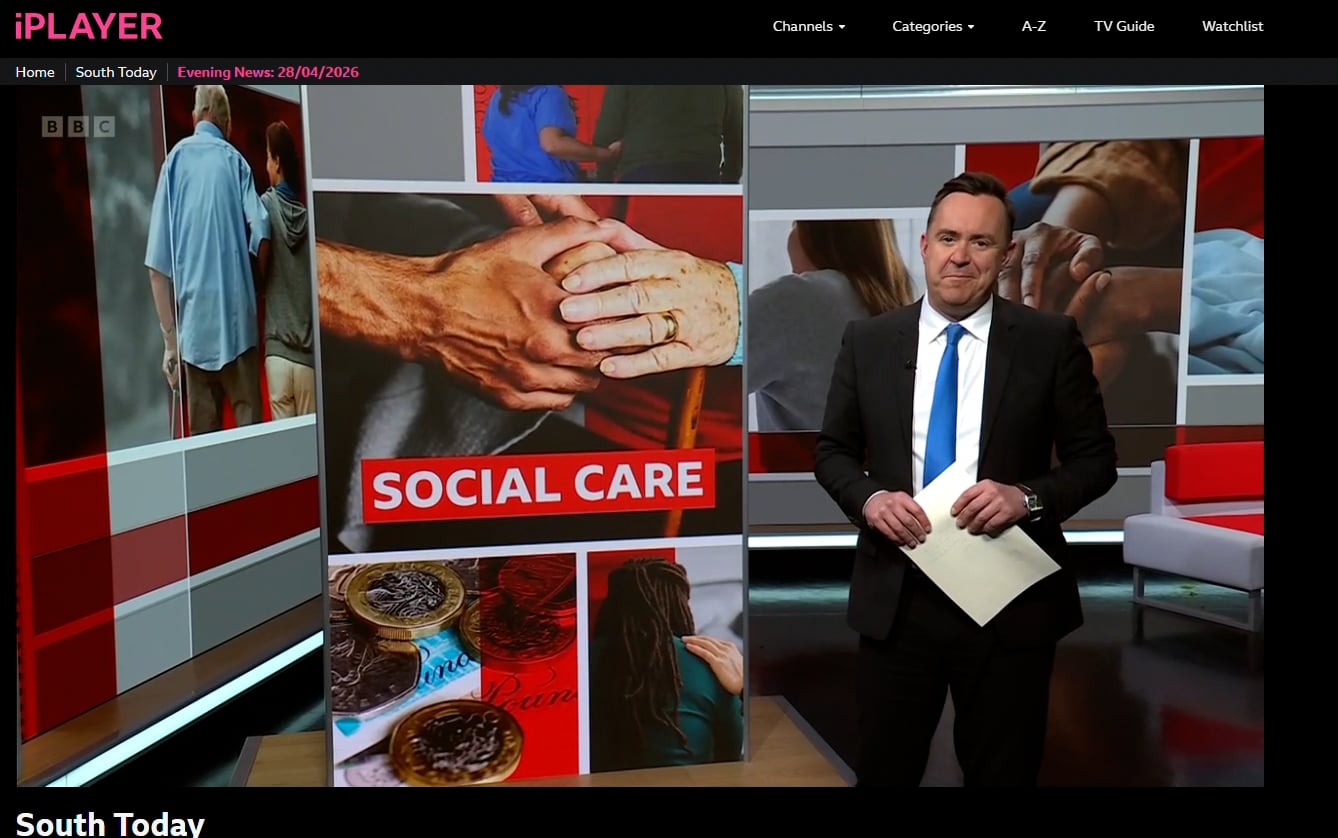
BBC South coverage highlights Dorset pilot reducing falls and ambulance callouts
How better understanding at night is already changing outcomes in care
This BBC South coverage and news story builds on previous coverage and puts a spotlight on the Dorset pilot, where a different approach to understanding what happens overnight is already translating into measurable change across care homes, reinforcing what has already been demonstrated in the Dorset pilot results.
The results are clear.
Falls have reduced by close to half, unwitnessed bedroom falls have fallen even further, and ambulance callouts are down by more than 60%, outcomes that point to something more than incremental improvement.
What sits behind that shift is not an increase in activity, but a change in how care is understood and delivered.
Night-time has historically been one of the least visible parts of care, with decisions shaped by routine rather than insight, yet the Dorset pilot is showing what happens when teams are able to see more clearly what is actually happening and respond accordingly.
With greater visibility of sleep, movement and behaviour, care becomes more precise.
Teams are able to respond earlier when something changes, while also avoiding unnecessary intervention when it does not, which reduces disruption and creates a calmer, more stable environment for residents.
That change does not stay contained to the night.
As residents experience more consistent rest, the impact begins to show in how they feel, how they engage and how likely they are to experience incidents, which in turn supports a more predictable and manageable environment for staff.
Thomas Tredinnick, CEO and Co-Founder of Ally Cares, said:
“What the Dorset pilot is demonstrating is that the night has been a blind spot in care for a long time, and when you begin to understand what is happening earlier, particularly in those quieter hours, the decisions teams make change quite quickly and the outcomes tend to follow.
This is not about adding more into care, but about removing guesswork and working with greater clarity, and that is where we are seeing meaningful progress.”
The coverage reflects a broader shift across the sector, where care is moving away from routine-driven approaches towards something more informed and proportionate, with teams increasingly able to tailor their response based on what is actually happening rather than what is assumed.
What is becoming harder to ignore is that relatively small changes in understanding are now leading to significant improvements in outcomes, not just in terms of safety, but in how residents live and how care teams experience their work.
Related articles
The missing hours: why sleep must be the next frontier in care
Reducing medication through better insight
A new model for care home occupancy
Better sleep, better outcomes: the commercial impact