
The Problems We Didn’t Know We Had: How Royal Star & Garter Used Ally to Transform Night-Time Care
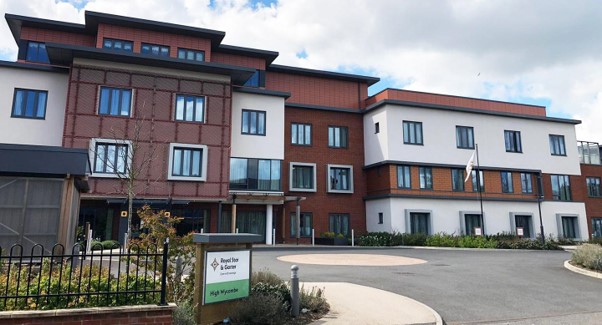
When Royal Star & Garter introduced Ally at its High Wycombe home, the organisation was not responding to a major operational challenge, a deterioration in quality, or a specific incident that demanded a new approach. The home had experienced teams, established routines and a strong culture of care, while residents were being supported appropriately and night-time checks were being completed as expected. From an operational perspective, there was no obvious problem to solve.
What emerged following implementation, however, was a realisation that some of the greatest opportunities for improvement were hidden within practices that had become accepted over time. The introduction of Ally gave the team visibility into night-time care that had never previously existed, allowing them to understand what residents were actually experiencing overnight rather than relying on assumptions, routine, or periodic observations.
As the data started to build, the team found themselves looking at long-established practices differently. Questions began to emerge that had simply never been asked before. Were some residents being disturbed more frequently than necessary? Were routine checks always improving safety, or were they sometimes compromising sleep and wellbeing? Could care be delivered in a way that maintained safety while also allowing residents to experience longer periods of uninterrupted rest?
These questions have become increasingly important across the sector following the publication of Ally and Care England’s The Sleep Gap: The Overlooked Factor Costing Lives, Time and Trust in Care, which highlighted the significant impact that poor sleep can have on health, wellbeing and quality of life in later life. .
As Kelda Fasai, Head of Quality and Governance at Royal Star & Garter, reflected:
“Sometimes you do not know what you do not know.”
That observation became one of the defining themes of Royal Star & Garter’s experience with Ally because the technology did not simply provide another way of monitoring residents. Instead, it created a new level of understanding that enabled the organisation to challenge assumptions, identify previously unseen opportunities for improvement, and rethink what good night-time care could look like.
When visibility changes the conversation
One of the most significant outcomes of Ally’s introduction was not the reduction in checks or the release of staff time, although both proved important. The real value came from the visibility that the system provided because, for the first time, teams could see patterns, behaviours and trends that had previously gone unnoticed.
Rather than simply confirming that residents were safe, the data began to tell a much richer story about how residents were actually experiencing the night. It highlighted how frequently some people were being disturbed, identified opportunities to personalise monitoring arrangements, and provided evidence that some long-established practices were not necessarily delivering the outcomes that teams had assumed.
Kelda described how this changed the way people thought about care, explaining that it was only after Ally was introduced that the organisation began to recognise some of its own hidden challenges.
“I do not feel that we had any real pain points before, but once we put in the devices, it was only after it went in that we realised we did have some pain points, because sometimes you do not know what you do not know. It became that we had data to refer to, and that data was telling us a story.”
The ability to see what was happening overnight created confidence to challenge routines that had become embedded over many years. Conversations moved away from asking whether checks had been completed and towards asking whether those checks were necessary, proportionate and genuinely improving outcomes for individual residents. In doing so, Ally helped shift the focus from routine-led care towards evidence-led care, creating a foundation for many of the improvements that followed.
Challenging long-standing assumptions
One of the clearest examples of this shift involved routine night-time checks.
Like many care providers, Royal Star & Garter had historically relied on regular checks to provide reassurance that residents were safe. The practice was well intentioned and widely accepted, but Ally gave the team an opportunity to examine whether every resident required the same approach.
The data encouraged staff to think differently and ask whether some residents could be monitored more proportionately while still remaining safe.
Kelda explained:
“When you look at the data coming from Ally, you realise, why am I doing an hourly check on that resident? It was only with Ally that we started to go, could we do two-hourly, could we do three-hourly? It stretched the imagination, because we had been very solid in our ways.”
The impact of those decisions has been significant. Physical checks reduced by 32%, while disturbing checks reduced by 34%, helping residents experience longer periods of uninterrupted sleep without compromising safety.
More recently, ongoing reviews have supported further reductions in checks for individual residents. One resident moved to six-hourly checks, while reporting data identified another resident also suitable for a reduction in checks following review. These decisions are not driven by blanket policy but by evidence, data and a growing understanding of individual resident needs.
The same approach is now being applied more widely across Royal Star & Garter. At the organisation’s Solihull home, physical checks have reduced by 45% since implementation, demonstrating how data-led review and ongoing optimisation can help teams move away from routine-based monitoring and towards more personalised care arrangements.
Better sleep creates better days
The reduction in unnecessary disturbance has become one of the most visible benefits of Ally at High Wycombe as residents are sleeping for longer, experiencing fewer interruptions, and waking feeling more rested.
As Reggie Ballos, Registered Manager at Royal Star & Garter High Wycombe, explained:
“Every time the carer checks them, it disrupts their sleep and they feel like it is time to get up even if it is midnight.”
For residents living with dementia, the impact of disrupted sleep can be particularly significant. Poor sleep can contribute to confusion, agitation, reduced engagement and lower overall wellbeing, which means protecting sleep is not simply about comfort but about supporting better outcomes throughout the day.
The team have seen first-hand how improved sleep can influence daytime wellbeing, mood and engagement. One resident who had previously been unsettled and regularly sought reassurance overnight is now sleeping through the night more consistently, waking earlier, eating breakfast and engaging more positively in daily routines.
“Sleep better without interruptions, and three hours of uninterrupted sleep is amazing because it improves their mood in the morning.”
Earlier intervention and more personalised care
The visibility provided by Ally has enabled staff to identify risk and changes in condition much earlier than would previously have been possible.
For one resident at high risk of falls, early alerts allow staff to intervene before an attempted mobilisation develops into a fall. Rather than relying on routine checks and hoping to be in the right place at the right time, the team are now able to respond when support is actually needed.
The system has also helped staff identify pain and discomfort through behavioural patterns that might otherwise have gone unnoticed. Repeated vocalisation, movement or restlessness can provide valuable insight into how a resident is feeling, particularly when they struggle to communicate their needs directly.
Changes in overnight behaviour have also supported earlier identification of potential infections and deterioration.
As Reggie explained:
“When a resident has a urinary infection, they are not sleeping well and they are getting in and out of the toilet. That is not normal for them, and that is when you know something is wrong and escalate it.”
The ability to identify subtle changes before they become incidents is something Ally has seen repeatedly across providers, including in its work exploring how technology can help reveal hidden resident needs that may otherwise go unnoticed.
Similar learning is emerging elsewhere within Royal Star & Garter. At Solihull, a review of overnight falls identified opportunities to further optimise settings, strengthen processes for newly admitted residents, improve alert management, and refine operational processes. Rather than viewing these findings as shortcomings, the organisation has used them as opportunities to continuously improve how Ally is deployed, creating a culture of learning and optimisation around falls prevention and resident safety.
Creating time for more meaningful care
Reducing unnecessary checks has not meant delivering less care. If anything, it has enabled staff to focus more attention on residents who genuinely need support.
The High Wycombe team estimate that Ally has released approximately five hours of staff time every night. Rather than being absorbed into administrative tasks, that time is being redirected towards more meaningful care activities, including supporting residents who are awake, reviewing care plans, updating records and spending quality time with individuals who would benefit from additional interaction.As Reggie explained:
“They have more time to spend with residents who are awake and also to look at care plans and write quality care notes rather than going in and out of rooms unnecessarily.”
The result is not simply greater efficiency but a better use of staff time and expertise.
From monitoring residents to understanding them better
Perhaps the most important outcome has been cultural rather than operational.
The introduction of Ally has changed how conversations take place across the organisation. Data has become a shared reference point that supports discussion, reflection and continuous improvement. Rather than relying on assumptions or individual perspectives, teams are increasingly able to explore decisions using evidence.
Reflecting on the journey, Kelda said:
“It has allowed us to ask questions that we would never have asked before. We were asking questions now and looking at things that we just never would have done.”
More recently, the organisation has seen improvements in communication between day and night teams, with staff using shared insight to discuss settings, review care approaches and refine decision-making.
“The team have been over the moon and mentioned that using Ally has opened up a completely new line of communication with the night team. People are openly sharing their thoughts on what the appropriate settings should be.”
This willingness to question, learn and adapt has become one of the defining features of Royal Star & Garter’s implementation. By observing the technology in use within other care settings and learning directly from experienced teams has helped strengthen understanding of the operational and clinical benefits while refining implementation plans and accelerating adoption.
In many ways, Ally has not simply helped Royal Star & Garter understand what is happening overnight. It has helped the organisation become more curious, more evidence-led and more willing to challenge established practices in pursuit of better outcomes.
Looking ahead
Royal Star & Garter’s experience demonstrates that some of the most important opportunities for improvement are not always obvious. Before Ally, the organisation did not believe it had a significant challenge around night-time care. After Ally, it discovered opportunities to improve sleep, reduce unnecessary disturbance, identify risks earlier, strengthen communication and make more informed decisions.
By making the unseen visible, Ally helped the organisation move beyond assumption and towards understanding. The result has been more than fewer checks or earlier intervention. It has been a transformation in how Royal Star & Garter thinks about night-time care, resident wellbeing and continuous improvement.
What might you be missing overnight?
Royal Star & Garter did not introduce Ally because it believed it had a significant problem to solve. It introduced the technology to gain greater visibility into what was happening overnight, and in doing so uncovered opportunities to improve sleep, reduce unnecessary disturbance, identify risks earlier and make more informed care decisions.
If you would like to understand what is really happening overnight in your care home, we’d be delighted to show you how providers across the UK are using Ally to create calmer nights, better sleep and more personalised care.
Contact the Ally team to arrange a conversation or demonstration and discover what your night-time data might be telling you.
Related articles
Sleep is a Right: Protecting Rest and Wellbeing in UK Care Homes
Transforming Care at Azalea Court: A Resident Monitoring Pathway Powered by Ally Cares
Acoustic Monitoring: Introducing an AI-Driven System in a Care Home
Supporting Veterans Through Digital Innovation | How Royal Star & Garter Uses Ally to Enhance Care