
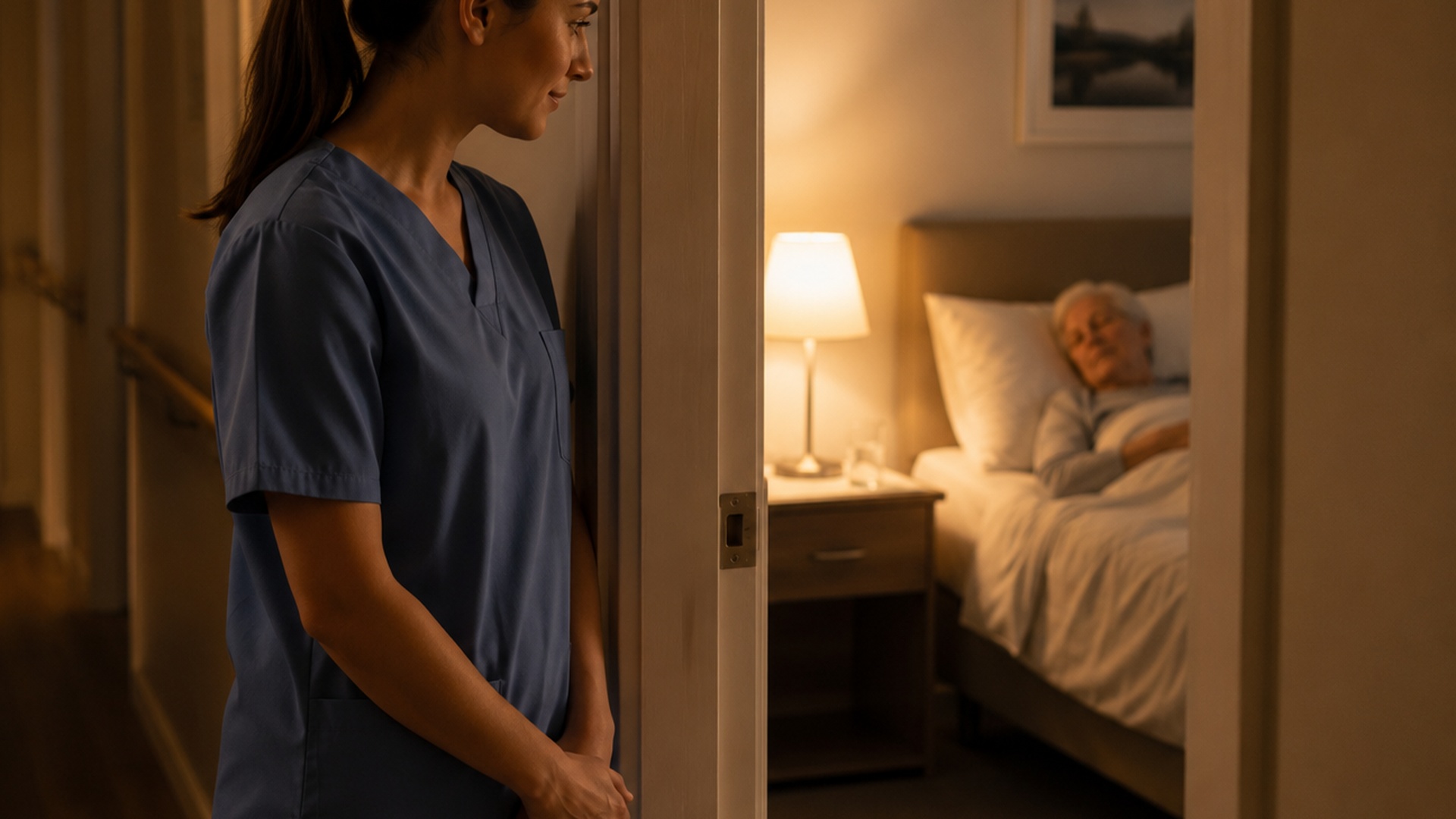
Why care homes are rethinking twilight hours
Twilight hours are often one of the most difficult and least understood parts of the day within care homes. In this article, Thomas Tredinnick explores how providers are creatively rethinking evening routines, environments and overnight support to create calmer nights and better resident outcomes.
Twilight hours are about more than staffing pressures
There is a tendency within social care to think about evenings primarily in terms of staffing pressures, medication rounds and the gradual transition from day shift to night shift, yet what many providers are now beginning to recognise is that twilight hours shape far more than simply the operational flow of the home, because the environment residents experience during this part of the day often influences how well they sleep, how settled they feel overnight and how they function emotionally and physically the following morning.
What has been particularly interesting across a growing number of Ally sites is not simply the introduction of new technology into care environments, but the creativity providers have shown in rethinking routines, staffing approaches and evening environments once they have been able to properly understand what residents are actually experiencing as the day transitions into night.
This shift increasingly sits alongside wider conversations around sleep positive care, where providers are recognising that calmer nights are often shaped several hours before residents actually fall asleep.
Rethinking long-established evening routines
At The Lawns Nursing Home, part of the Heritage Manor Group, the conversation quickly moved beyond monitoring itself and into the wider structure of evening care, because once the home gained clearer visibility into movement, sleep disruption and resident behaviour during twilight periods, staff began reassessing whether long established routines were genuinely supporting residents in the best possible way.
Melanie Dawson, Home Manager at The Lawns, explained:
“Previously, hourly checks were required, which, although essential, disturbed sleep patterns, especially impacting residents with dementia who are highly sensitive to disruptions. Ally’s monitoring system has been marvellous in enabling our residents to live their best possible lives because it significantly improves sleep quality, reduces falls and decreases hospital visits. We’ve also seen a noticeable improvement in staff time management, allowing carers to engage more with residents.”
One of the most innovative operational changes introduced by the home was the decision to reposition staffing during higher-risk twilight periods so that support could be delivered more intelligently during the parts of the evening where residents were most likely to require reassurance, assistance or intervention.
That may sound like a relatively simple adjustment, but it reflects a very different philosophy around evening care because the focus shifts away from fixed routines and towards understanding where anxiety, movement and disruption are actually building across the home in real time.
The wider impact at The Lawns included a 61% reduction in checks, a 34% increase in uninterrupted sleep and an 88% reduction in falls amongst residents considered highest risk, although perhaps most importantly, the home reflected that residents became “better rested, less agitated and more engaging”, which demonstrates how thoughtful changes during twilight hours can influence the emotional atmosphere of the entire home.
Many of the operational discoveries being surfaced within homes today would previously have remained hidden overnight, which is why providers are increasingly exploring the value of better unknown night-time insights when reviewing how evening and overnight care is structured.
Creating calmer environments that help residents settle naturally
The creativity emerging across care homes is often less about dramatic intervention and more about providers rethinking aspects of evening life that had previously been accepted as normal.
At Azalea Court, for example, the home began redesigning the environment residents experienced overnight once staff could properly understand how lighting, television noise and repeated activity were affecting people trying to settle and sleep.
Julie Burton, Head of Operations explained:
“If you come here late at night it’s silent, but a calm silence. The corridors are dark, the doors are closed, people are sleeping. Before, the lights were on all night and TVs were left running. Now they go off. Residents are more rested, staff talk quietly, and even our electricity use has dropped.”
What stands out in that example is that the home is not describing expensive redesign or large-scale operational upheaval, but relatively thoughtful environmental adjustments that became possible once staff could finally see the cumulative impact that lighting, noise and repeated movement were having during evening and overnight periods.
This more thoughtful approach to overnight wellbeing is also increasingly influencing wider conversations around supporting complex care with confidence, particularly where providers are supporting residents with higher levels of cognitive or clinical need.
Moving away from routine-led intervention
That same willingness to challenge long established routines emerged at Charnwood Country Residence, where staff began questioning whether repeated overnight checks were genuinely helping residents settle properly or unintentionally contributing towards further sleep disruption and exhaustion.
The home explained:
“We’ve changed our routine checks from two-hourly to four-hourly because we’ve got Ally in place. So residents are sleeping for longer due to not providing unnecessary checks. You’re not waking them up as much as we did before because it doesn’t matter how quiet you are, you open that door and it makes a noise and you disturb them.”
I think there is something important in that honesty because social care has understandably spent years prioritising observation and reassurance, yet many providers are now recognising that quality of intervention matters just as much as frequency, particularly during twilight periods where residents are trying to relax naturally into the evening.
Charnwood also described how Ally enabled the home to move away from rigid routine-led intervention towards more responsive support delivered closer to the point residents genuinely required assistance.
As the team explained:
“From going every two hours and disturbing them, they may need care 20 minutes later, but you’re not due back. Now, when the notification goes off, we go down and they receive care in real time when they need it.”
That is a very creative shift in thinking because the home is effectively redesigning evening care around actual resident behaviour rather than institutional timing.
The same visibility that is helping homes rethink intervention frequency is also supporting wider work around reducing medication through insight, where providers are increasingly using overnight patterns and behavioural insight to support more informed clinical decision-making.
Designing evening support around real resident behaviour
At Upton Manor, the home similarly began extending observation intervals safely once staff had greater confidence around overnight movement and settling patterns.
The team explained:
“Those that were on hourly we pushed to two-hourly, the two-hourly to four-hourly, and the three-hourly to six-hourly. Residents on our residential floor have said they’re less interrupted and getting a better night’s sleep because the door isn’t opening and flooding the room with light every couple of hours.”
Again, what stands out is that the innovation is not technology for technology’s sake, but homes creatively rethinking the experience residents are actually having during the evening and overnight period.
Why twilight hours are becoming a strategic focus for providers
The broader pattern emerging across these homes is that twilight hours are increasingly being viewed not simply as a difficult operational window to manage, but as one of the most important opportunities providers have to influence sleep quality, emotional wellbeing and the overall atmosphere of the home itself.
Because calmer nights rarely begin at midnight.
In many care homes, they begin several hours earlier through quieter environments, more thoughtful routines, more responsive staffing and a willingness to rethink long established ways of working once providers can finally see what residents are actually experiencing as the day transitions into night.
Learn more
To explore more real-world examples of how care homes are improving sleep, reducing disruption and supporting calmer nights with Ally, visit:
Related articles